

Today, AI is already embedded in many of the tools and services we use every day, often without us even realizing it.
In pharmaceutical manufacturing, AI is becoming a key enabler for improving quality control, increasing production efficiency and reducing the risk of human error. As production processes become more complex and regulatory requirements continue to grow, traditional rule-based vision systems are not always sufficient to detect highly variable defects or process anomalies.
In a previous article about HQBlister+, we explored how AI-powered vision inspection can improve blister inspection. Today, we are extending that approach to new applications across pharmaceutical packaging, filling and assembly processes.
This article presents five real-world AI inspection use cases we are devoloping to solve critical challenges in pharmaceutical manufacturing, from OCR verification and foreign particle detection to object counting and stopper position analysis.
1. AI-Powered OCR inspection on tubes
The challenge
Reading embossed or mechanically punched characters on pharmaceutical tubes is far more complex than it may appear.
Variations in production parameters, material properties, lighting conditions and character quality can significantly affect readability. Machine integration has traditionally represented an additional challenge, particularly when configuring illumination systems capable of consistently highlighting specific character types and ensuring sufficient contrast for reliable inspection. With AI-based OCR algorithms, however, dependency on highly optimized lighting conditions is significantly reduced. By learning from large datasets of real production scenarios, these systems can maintain high reading accuracy even when character appearance varies due to packaging materials, printing processes or environmental conditions. Similar-looking characters, such as "0" and "O" or "8" and "B", which have historically posed difficulties for conventional OCR technologies, can be distinguished more effectively through advanced pattern recognition and contextual analysis, resulting in more robust and reliable code verification.

How AI solves it
Using neural network-based OCR technology, the system learns the natural variability of printed or embossed characters and can accurately recognize markings even when they are partially degraded or inconsistent.
Benefits
- Improved OCR accuracy
- Reduced false rejects
- Reliable batch and lot verification
- Greater flexibility across different tube formats
2. AI detection of glass fragments inside vials
The challenge
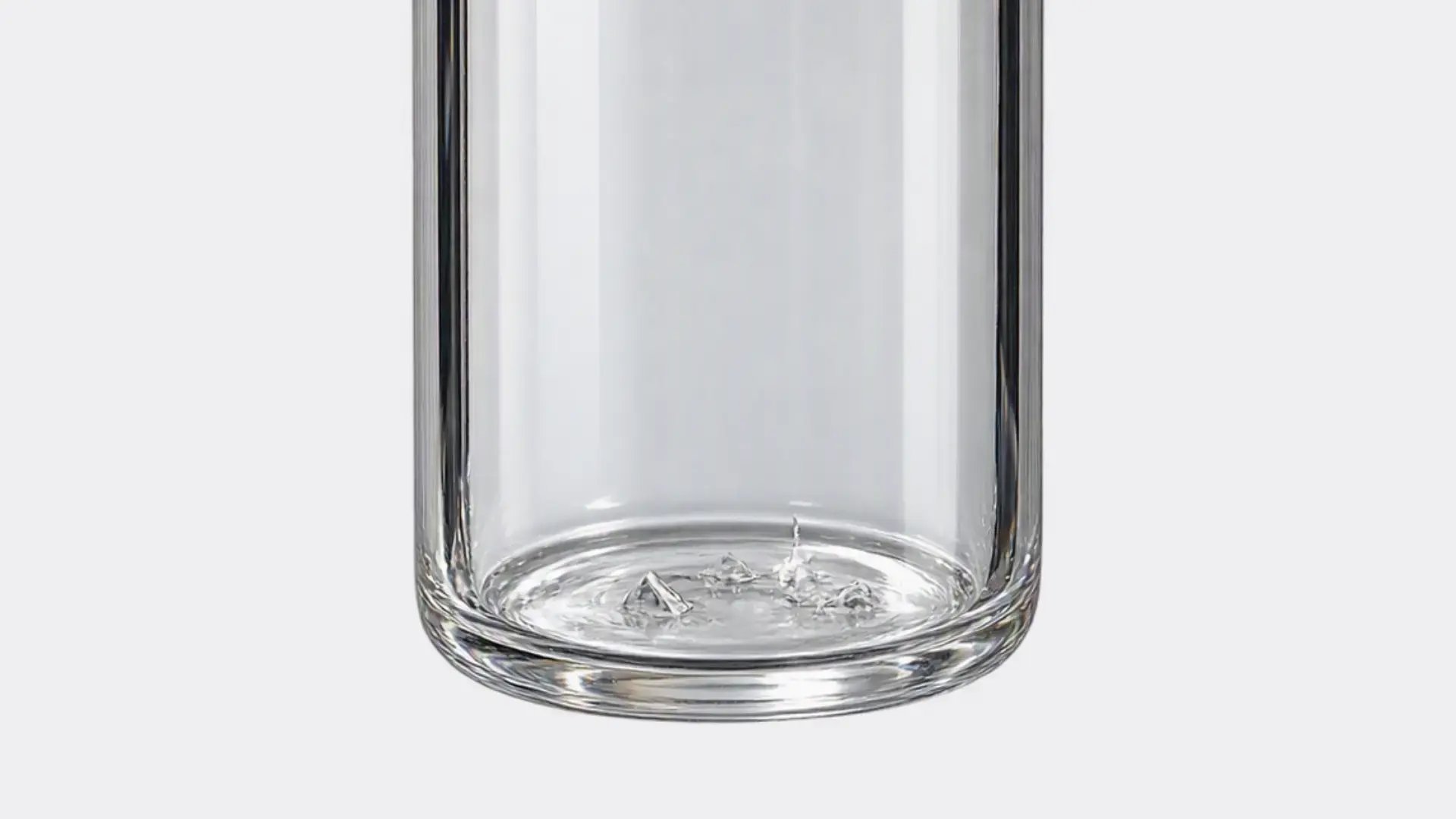
One of the most critical risks in freeze-dried pharmaceutical production occurs when a vial breaks inside the sterilization tunnel.
Small glass fragments can fall into neighboring empty vials before the filling process. Because these particles may settle at the bottom of the container, they are difficult to detect using conventional inspection methods after filling and capping.
How AI solves it
An AI-based vision system analyzes each vial using dedicated neural networks trained to identify glass fragments and contamination patterns.
Unlike traditional rule-based algorithms, AI can recognize subtle visual anomalies under highly variable conditions, significantly improving detection reliability.
The solution is designed to support multiple vial formats and production requirements. Separate neural networks can be trained for each vial family, while liquid lens technology allows rapid adaptation to different formats without extensive mechanical adjustments.
Benefits
- Early foreign particle detection
- Improved product safety
- Reduced risk of contaminated batches
- Greater process reliability
3. AI cosmetic inspection of cartons and packaging
The challenge
Packaging defects can occur due to issues during carton forming, sealing operations, or tamper-evident (TE) application.
Traditional inspection methods often require extensive parameter configuration whenever a new format is introduced.

How AI solves it
AI enables a more flexible approach by learning the appearance of a correctly assembled carton and automatically identifying deviations from the expected condition.
The system can quickly adapt to new formats with only a small number of reference samples, reducing setup time and simplifying changeovers. Traditionally, introducing a new packaging format often required extensive parameterization to accommodate differences in artwork design, color schemes, dimensions and layout variations. Even products belonging to the same family but differing in SKU, language or package size frequently demanded dedicated inspection settings and significant validation effort. AI-based vision algorithms overcome much of this complexity by learning the key visual characteristics directly from reference samples rather than relying on manually configured rules. This enables faster deployment of new formats, reduces engineering effort and provides greater flexibility in environments where product portfolios and packaging variations are continuously evolving.
Benefits
- Fast format changeovers
- Detection of cosmetic and packaging defects
- Reduced manual configuration
- Increased packaging line efficiency
4. AI object counting and completeness verification
The challenge
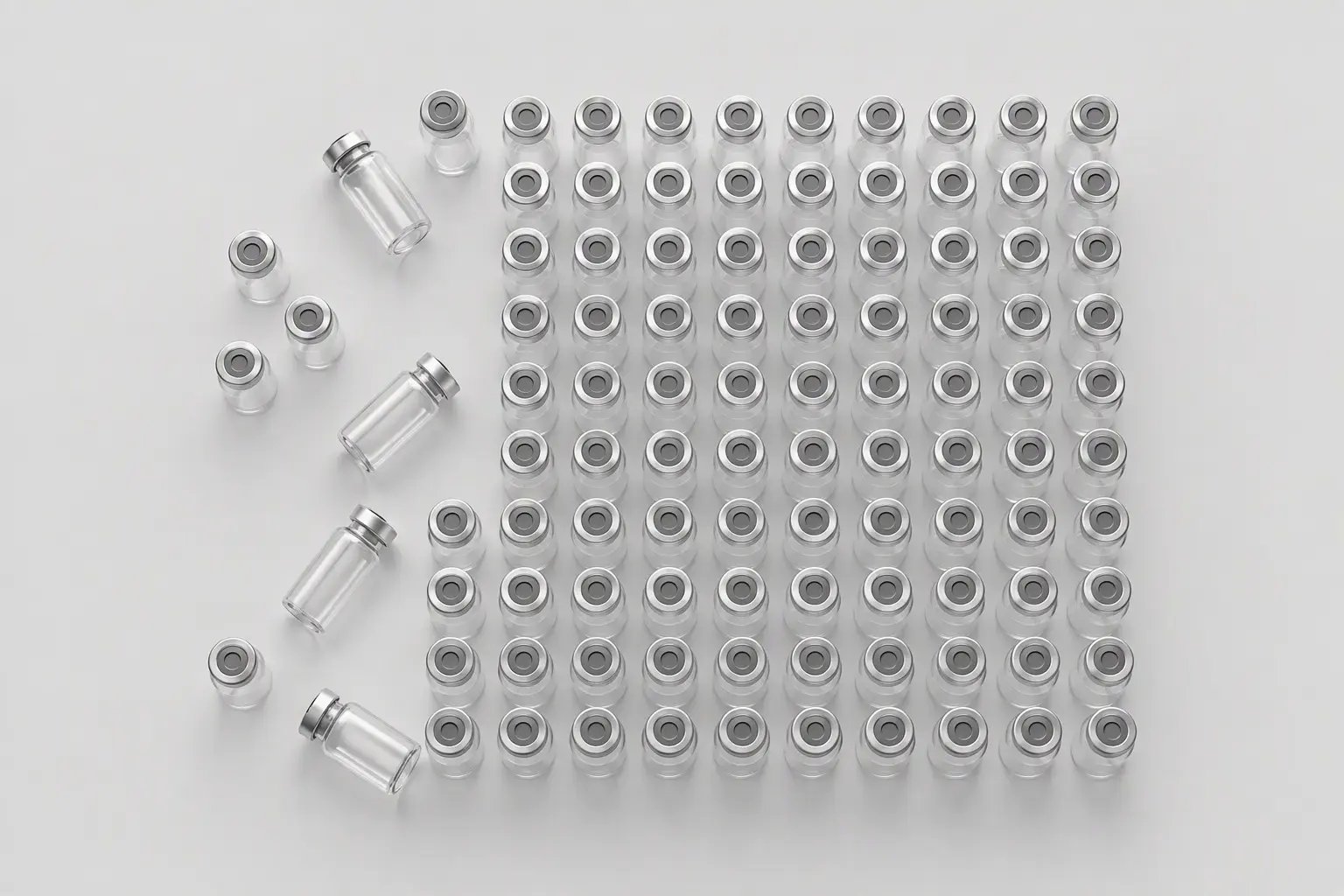
Many pharmaceutical processes require verifying that the correct number of components is present before a product can be released or advanced to the next production stage.
Traditional counting methods become challenging when multiple object types must be identified simultaneously. Conventional systems often rely on predefined rules and object-specific configurations, which can become increasingly complex as product variety grows. AI-based counting algorithms address this challenge by accurately recognizing and differentiating multiple object types within the same inspection process, reducing the need for manual adjustments and continuous fine-tuning.
How AI solves it
Using object detection models, the system can identify, classify and count multiple categories of objects within the same image.
The technology can be used to:
- verify group completeness;
- detect missing products;
- classify the same object across different conditions;
- print accurate counts on labels;
- verify group completeness while monitoring process metrics.
Benefits
- Higher counting accuracy
- Automated completeness checks
- Increased production efficiency
5. AI stopper position and feeding inspection
The challenge
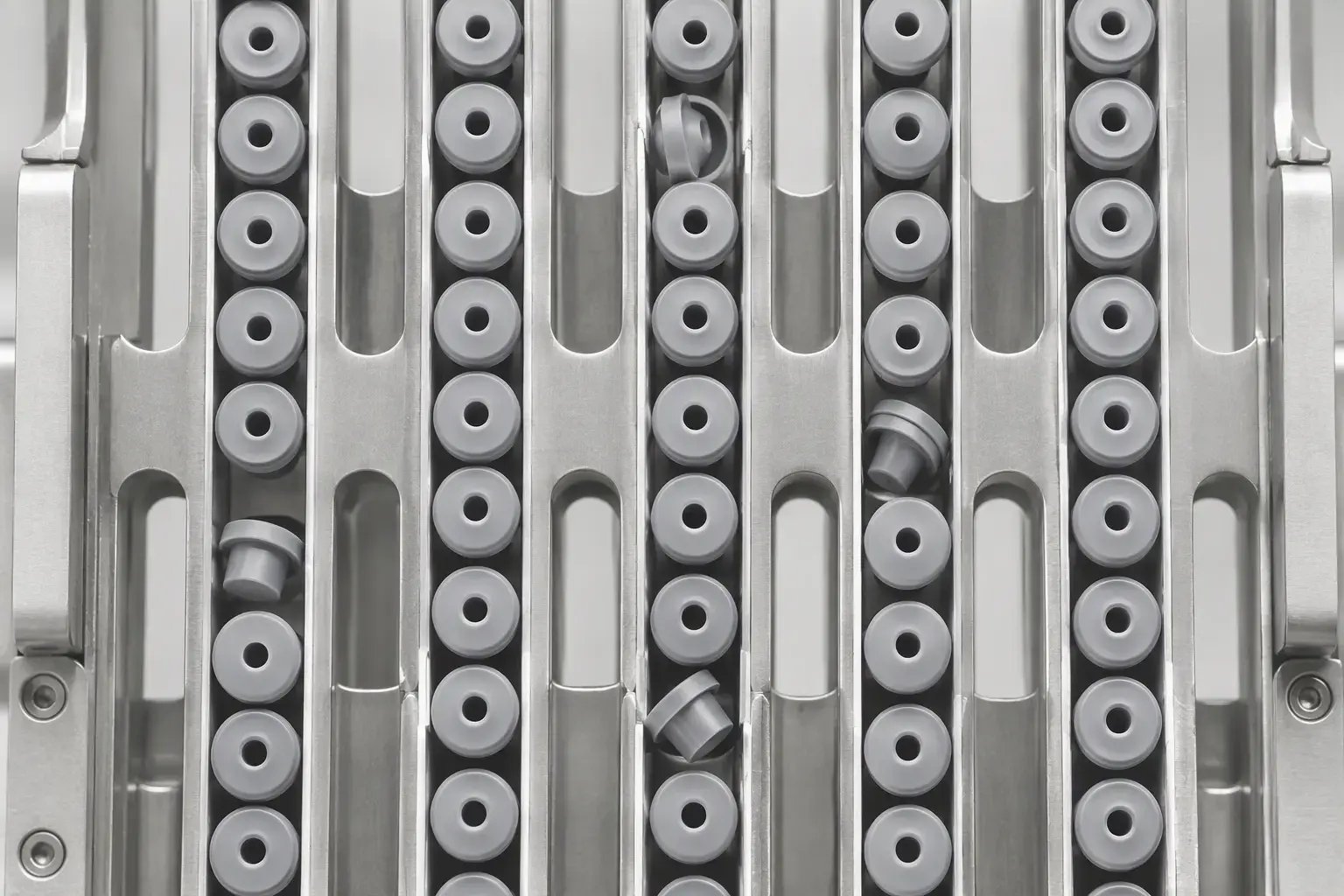
In syringe production lines, stopper feeding is a critical process.
If stoppers enter the machine in the wrong orientation or if the quantity is not correct, downstream operations may fail. In severe cases, improperly positioned stoppers can contribute to syringe breakage, resulting in costly machine stoppages and production losses.
How AI solves it
AI-based vision inspection continuously monitors the stopper feeding area, verifying both the position and quantity of components in real time.
By recognizing abnormal configurations before they cause process failures, the system helps prevent downtime and maintain production continuity.
Benefits
- Reduced machine stoppages
- Prevention of syringe breakage
- Increased line efficiency
- Real-time process monitoring
The future of AI in pharmaceutical inspection
Artificial Intelligence is rapidly expanding beyond traditional quality control applications. From OCR verification and pharmaceutical packaging inspection to particle detection and process monitoring, AI-powered vision systems are enabling manufacturers to achieve higher quality standards while reducing operational complexity.
The five applications presented in this article represent only a small portion of what is possible. As AI technology continues to evolve, pharmaceutical manufacturers will gain access to increasingly intelligent, adaptive, and scalable inspection solutions capable of addressing challenges that were previously difficult to automate.
The future of pharmaceutical vision inspection is not simply faster automation. It is smarter quality assurance powered by AI.
Request information