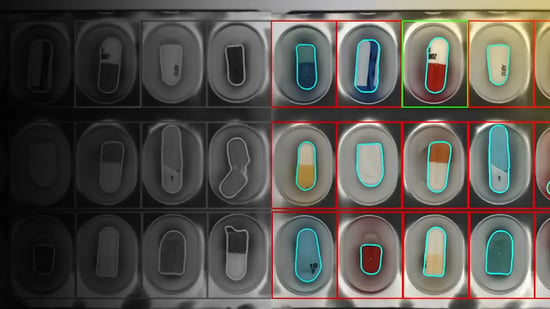

In pharmaceutical manufacturing, every millisecond counts and every detail matters. This is especially true in visual inspection, where even a tiny crack, chip, or misprint on a vial can compromise product safety.
Traditionally, switching from one container format to another— from 2R to 100 R—requires mechanical adjustments: repositioning the camera. In fast‑paced production, these interventions slow down workflow and introduce opportunities for error.
Liquid optics technology is transforming this process.
By using lenses whose focal power changes electronically (without any mechanical movement) machine vision systems can adapt instantly to new formats. The result is faster setup, higher precision and greater reliability.
What are liquid optics?
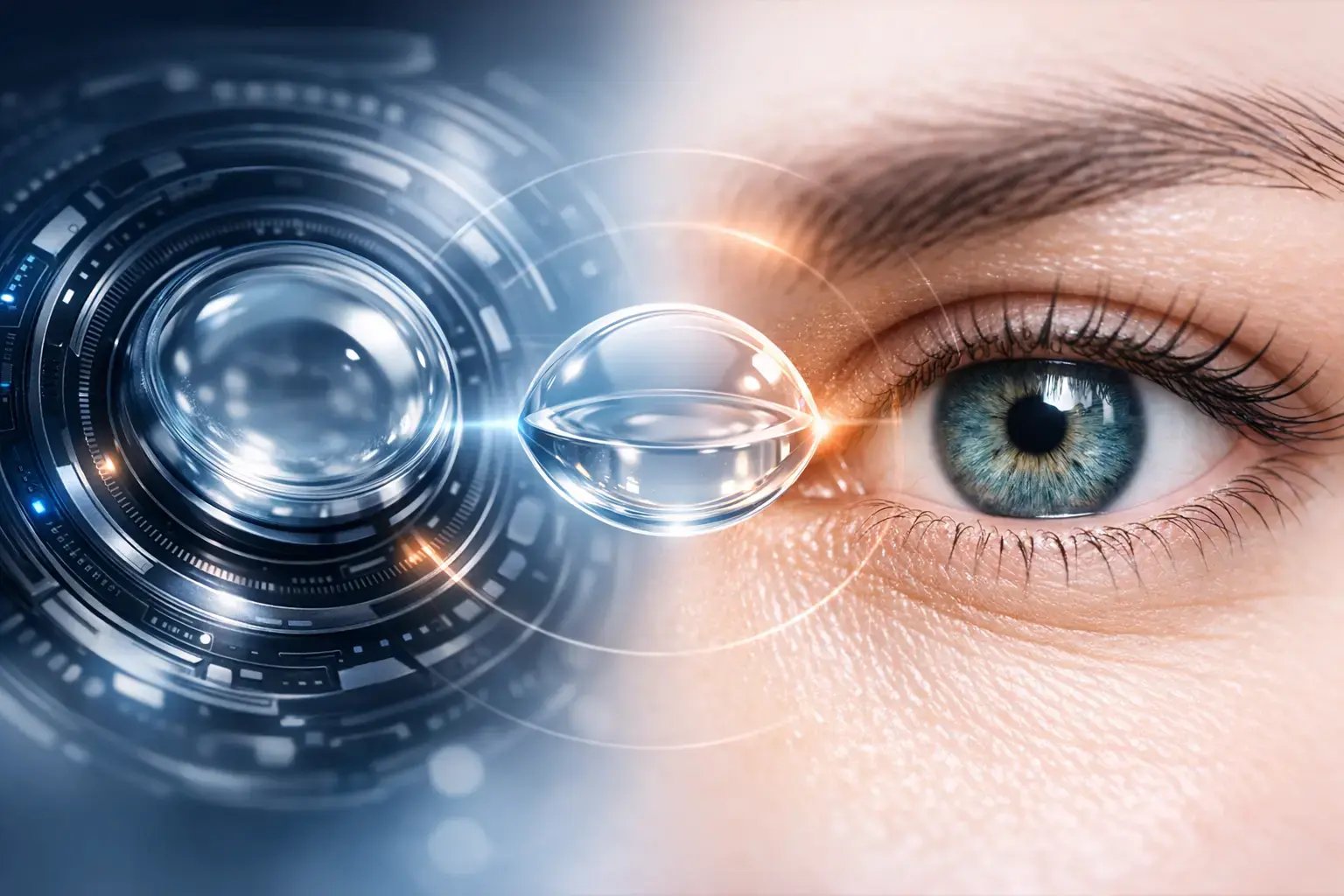
Liquid optics are shape-changing lenses that use a controllable liquid element instead of a fixed curvature glass lens. When an electrical signal is applied, the liquid element changes shape, modifying its curvature and consequently the optical power, just like the human eye.
How they work:
- the core element consists of a container, which is filled with an optical liquid and sealed off with a thin, elastic polymer membrane;
- the deflection of the membrane and with that the radius of the lens can be changed by applying an electrical current;
- this instantly adjusts the focal length without motors or moving parts;
- the system achieves response times of a few milliseconds and exceptional stability.
In practice, this means that the camera adjusts itself to the correct focus depending on the object, even if the object’s height, diameter, or distance changes.

Why liquid optics matter in pharma inspection
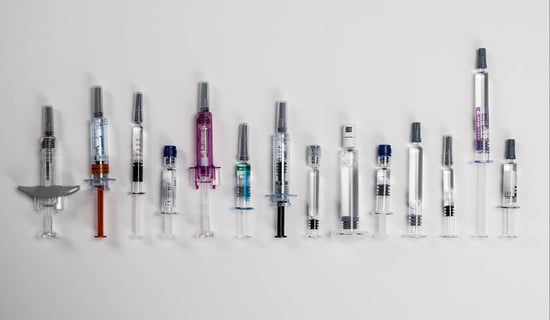
Pharmaceutical containers vary widely in size, geometry, transparency levels, and optical path lengths. A 2R vial, for example, has a very different diameter and curvature compared to a 50R vial.
With traditional glass optics:
- a different format might mean a different focus position;
- operators must physically adjust the camera;
- changeover time increases;
- misfocus risks increase during the first cycles after format change.
Liquid optics eliminate most of this.
Key benefits
- Reduced mechanical intervention during format change
Only camera position might need to be changed while lens focus doesn’t need to be manually adjusted anymore. Once parameters for each format are set, the system recalls them and refocuses automatically. - Instant adaptation across ISO‑standard formats for seal
13 mm, 20 mm, 32 mm and beyond, focus is always correct regardless of diameter. - Sharp imaging at varying heights and distances
Curved, transparent surfaces like glass vials usually require precise, narrow-depth focusing. Liquid lenses maintain clarity automatically. - Faster cycle times versus traditional autofocus systems
No delay, electronic focusing is immediate. - Higher reliability
No motors means less wear, less maintenance, and fewer drifts over time.
How liquid optics improve format change scenarios
One of the greatest strengths of liquid lenses is their ability to adapt instantly to changing optical distances and geometries. In pharmaceutical inspection, where products may vary in height, diameter, curvature, or layer position, this means a single vision system can handle multiple formats without any mechanical refocusing.
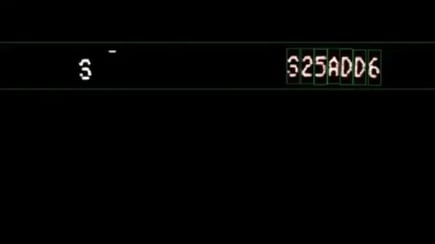
1. Character inspection on multiple formats
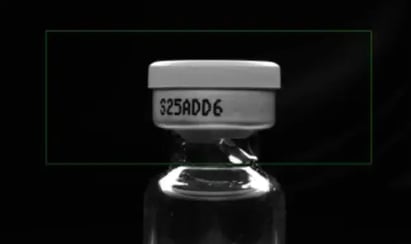
When inspecting printed characters, ring codes or labels across different vial sizes, liquid optics allow one camera to adapt effortlessly to the changing diameters and heights of the containers. Even when the optical path becomes longer for smaller diameters or shorter for larger ones, the lens electronically adjusts focus in real time. As a result, operators simply select the new format in the recipe and the system immediately refocuses with no physical regulation other than the possible camera position adjustments.
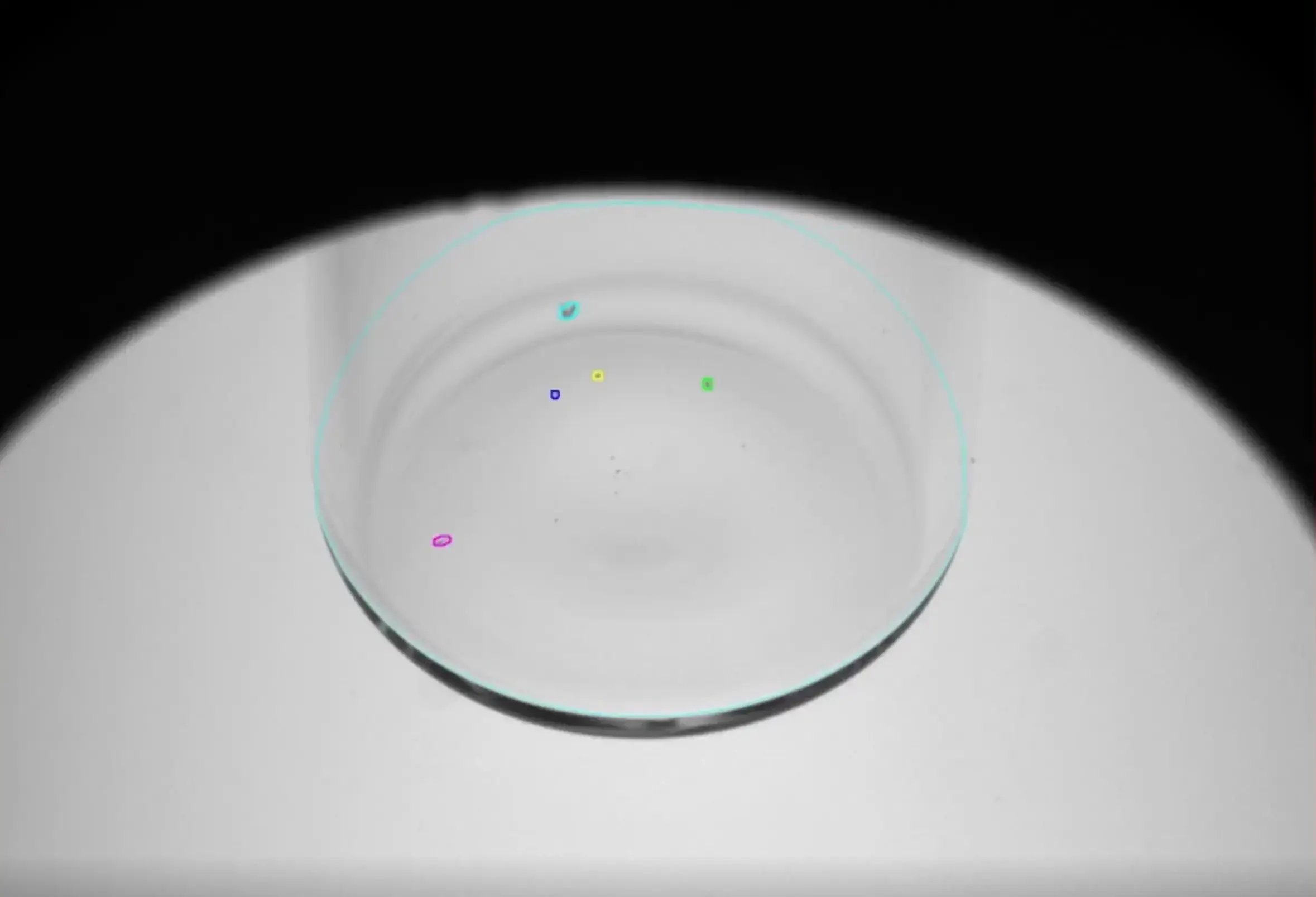
2. Fragment and crack detection in glass vials
Glass inspection demands extremely stable focusing due to reflections, transparency and varying curvature. When switching between vial formats, the camera’s position might shift, but the liquid lens compensates electronically for the difference in distance and optical geometry. This maintains continuous clarity even as curvature changes, ensuring that micro‑fractures, inclusions and glass particles are consistently detectable across all vial types.
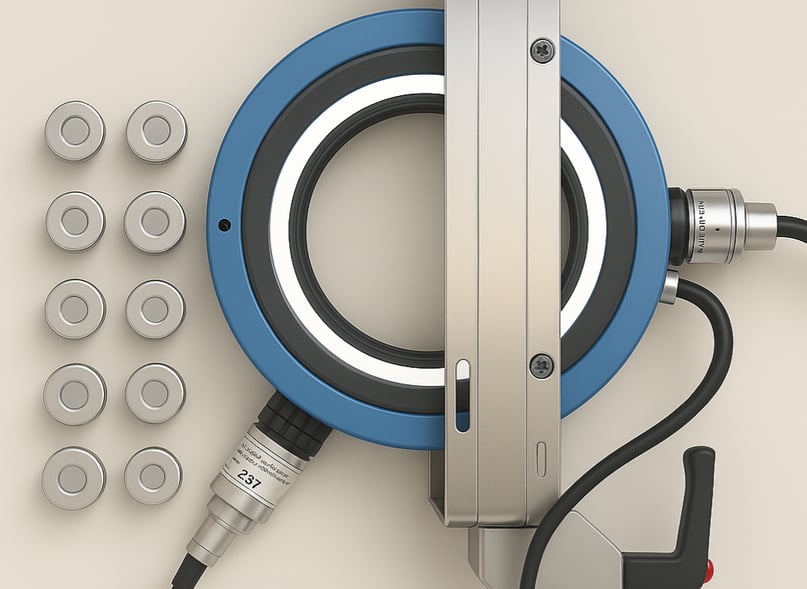
3. Multi‑camera, multi‑mirror setups
In more complex stations—such as inspection heads equipped with multiple mirrors, several cameras surrounding the vial and a vertically moving structure—liquid optics keep every camera in perfect focus throughout the movement. As the head lowers, rotates or changes alignment, each optical path adjusts automatically. This is particularly critical in full 360° inspections, where even minimal focal drift could cause subtle defects to be missed.
4. Casepacker and aggregation systems
In manual and automatic casepackers, each layer of cartons must have its text or Data Matrix code verified before aggregation. Because the height of the case is fixed while layers accumulate, the camera must focus at different depths multiple times during the cycle. Liquid optics handle these shifts electronically, layer by layer, without operator intervention. The result is smoother operation and faster, more reliable aggregation inspection, even as the stack grows.
Why this matters for pharma manufacturing
In high‑speed environments, the ability to switch formats instantly—without stopping to adjust optics—directly impacts:
- OEE improvement: less downtime during changeover;
- regulatory compliance: clearer images mean better traceability and fewer false rejects;
- Lower maintenance costs: no moving parts means fewer failures.
Liquid optics aren’t just about sharper vision: they’re about smarter, adaptive vision.
They enable inspection systems that adjust themselves automatically, ensuring accuracy regardless of product variability.
Request information