
If counterfeiters can industrialise fake perfume, brands must industrialise authenticity.
The recent fake-perfume raid in Spain shows that counterfeiting in beauty has become industrial and cross-border. For brands, this means legal action alone is no longer enough. You need product-level visibility from packaging line to market. SEA Vision enables this by assigning each unit a unique identity, supporting authentication, serialisation, distribution control, and in-line quality inspection. The result is stronger brand protection today — and a DPP-ready traceability foundation for tomorrow.
The Reuters case
The Reuters raid confirms the threat is real, and SEA Vision brings together serialisation, verification, quality inspection, and traceability to help address these risks at scale.
The case is a very strong wake-up call for the beauty industry: Spanish authorities, supported by French customs, dismantled what they described as Europe’s biggest fake-perfume factory, seizing materials worth more than €94 million, 1.2 million bottles of counterfeit perfume, and raw materials to produce 150,000 litres of fake fragrances imitating more than 50 brands. That is not a small grey-market issue — it is industrial-scale counterfeiting operating across borders, with the ability to copy brands at volume and distribute across Europe.
For a perfume or cosmetics brand, this means the risk is no longer just “someone copied our packaging.” The risk is that counterfeiters can now build parallel industrial supply chains, infiltrate distribution, damage consumer trust, create health and safety exposure, and force the brand into a purely reactive mode where enforcement starts only after the damage is already done. The same Reuters report says the network moved large quantities of counterfeit perfume by road across Europe, which means the vulnerability is not only at the production level, but across the entire logistics and distribution chain.
That is exactly why brand protection, track & trace, and anti-counterfeiting must become part of the product infrastructure, not just part of legal enforcement or post-market investigation. This is where integrated traceability solutions play a role, combining serialisation, process automation, vision inspection, and data management to help beauty brands improve transparency, maintain quality, and better manage counterfeiting risks.
SEA Vision's Strategy
1) It gives every product a digital identity
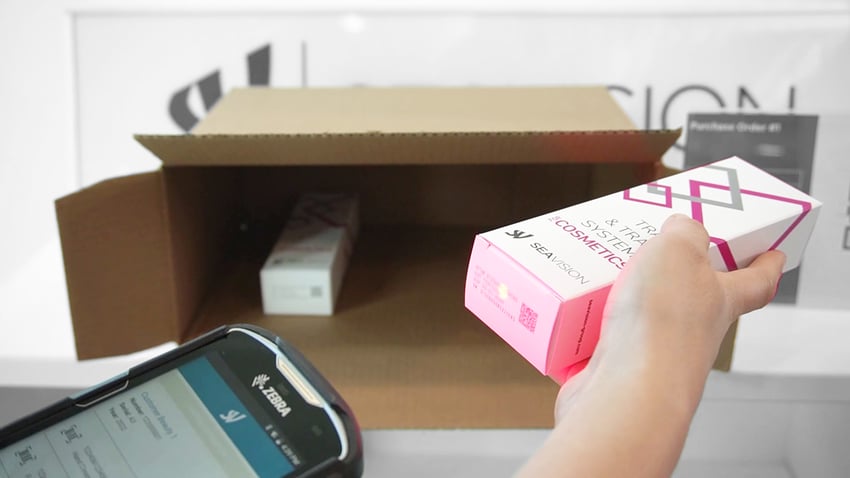
SEA Vision’s end-to-end traceability model is built around applying a unique identifier to each cosmetic product, recording that identifier across databases, and making it readable through the supply chain. That matters because the only scalable way to fight industrial counterfeiting is to move from “we know our SKU” to “we know this exact unit, where it was produced, and where it should be.”
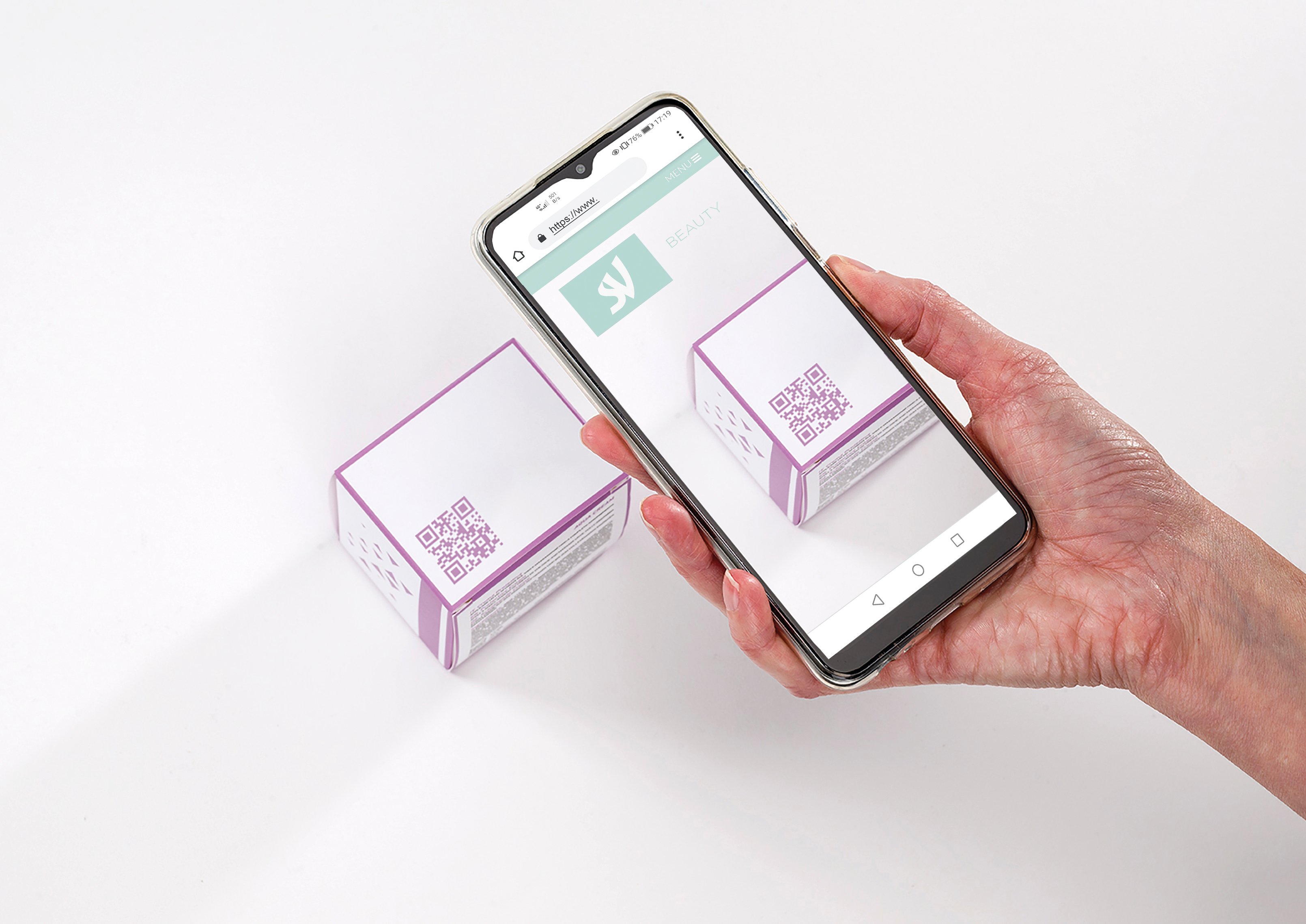
With that approach, the brand can move from generic authenticity claims to unit-level verification. Instead of investigating suspicious batches after a distributor complaint, the company can verify whether the specific bottle, carton, or case belongs to the legitimate production flow. Brandapp allows inspectors, retailers, and even end users to scan the QR code, retrieve product information and history, and verify authenticity and correct distribution. That is the difference between reactive enforcement and operational control.
2) It protects not only against fakes, but also against diversion and grey market leakage
Counterfeiting is only one side of the problem. Luxury beauty brands also lose value through unauthorised channels, parallel trade, and distribution outside intended markets. In this context, end-to-end traceability systems can support both product authentication and greater visibility across the supply chain.
That is commercially important because brand owners will not only be able to ask “Is this product real?”, it will allow them to ask, “Is this real product in the right market, in the right channel, at the right time?”. In a perfume business where prestige pricing and selective distribution are part of the value proposition, this is not just a compliance tool — it is a margin protection tool.
3) It combines authenticity with packaging and quality control
A beauty product can lose consumer trust even when genuine if there are coding errors, label mix-ups, missing components, or packaging defects. These issues can create confusion and lead consumers to question authenticity.
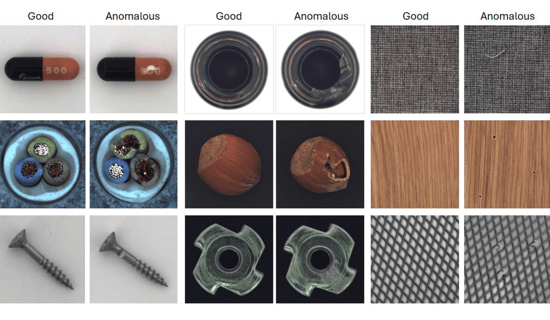
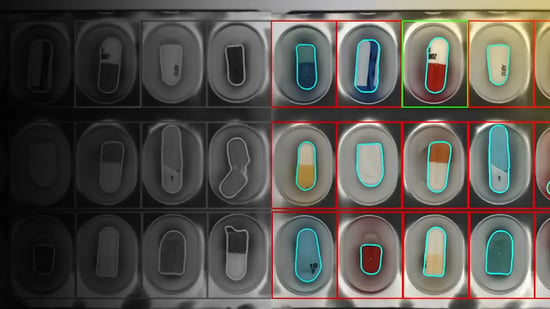
For this reason, traceability is often complemented by in-line vision inspection systems that monitor packaging integrity, code accuracy, label placement, and assembly quality during production. By checking products at scale, these systems help ensure consistency and reduce the risk of defects reaching the market.
In a sector where brand perception is closely tied to presentation, maintaining both authenticity and consistency is essential.
4) It creates the data foundation for the future Digital Product Passport
The longer-term strategic point is that anti-counterfeiting and traceability are no longer stand-alone projects; they are becoming the data backbone for future regulatory transparency. Under the Ecodesign for Sustainable Products Regulation (ESPR), the EU has established the legal basis for Digital Product Passports, which are meant to link a physical product to machine-readable information through a carrier such as a QR code, DataMatrix or RFID tag, enabling lifecycle visibility, compliance, and traceability across the supply chain.
So the message to beauty brands is simple: even if your exact product category is not the first mandatory wave, the systems you need for authentication, serialization, traceability, QR access, product data linkage, and supply-chain control are the same building blocks you will need for a DPP-ready future. SEA Vision is already positioning its cosmetics traceability solution around that exact convergence of authenticity, transparency, quality, and customer engagement.
In conclusion:
As beauty brands navigate an increasingly complex global marketplace, traceability technologies are becoming a key enabler of brand protection. By linking physical products to digital identities and making this information accessible across the supply chain, companies can better manage counterfeiting risks, improve operational visibility, and reinforce consumer confidence.
With the introduction of frameworks such as the Digital Product Passport, the industry is also moving beyond compliance toward a model where transparency and traceability are expected as standard. The systems put in place today for authentication and supply-chain visibility are likely to form the foundation for this next phase.
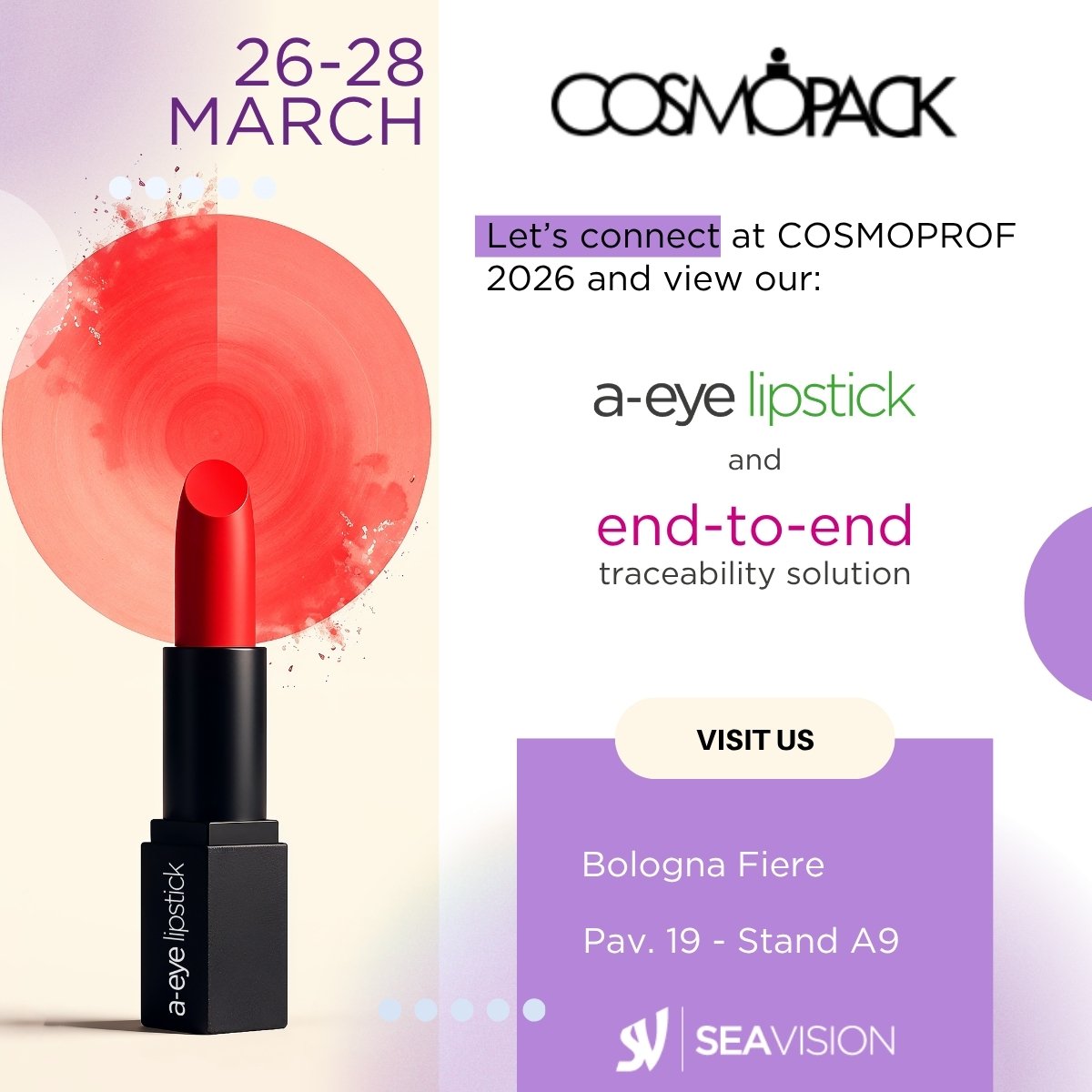
At Cosmoprof Worldwide Bologna (March 26–28), we will demonstrate how these capabilities can be applied in practice, including the integration of our end-to-end traceability solution within a perfume production line and the use of our AI-based inspection tool for lipsticks, the a-eye lipstick system.
Request information