

Artificial Intelligence is rapidly moving from theory to practice in pharmaceutical manufacturing. But in a highly regulated GMP environment, one question remains central: how can AI support quality processes while maintaining the control, traceability, and oversight required by regulators?
This topic was at the heart of the training session delivered by Annalisa Imberti, Quality Assurance Manager and Ileana Brega, QA Validation Coordinator during the final 2026 training event for AIFA (Agenzia Italiana del Farmaco) inspectors, organized by PDA Italy Chapter in Rome on October 19, 2026. The session explored the evolution from traditional vision systems to cognitive manufacturing, using SEA Vision's Automated Line Clearance solution as a practical example.
Beyond Inspection: The Evolution Toward Cognitive Manufacturing
Manufacturing has evolved from inspecting products to understanding processes and supporting decisions. Here is how this has improved:
- Product: smarter detection, fewer false rejects and more robust inspection
- Activity: focus on automated line clearance
- Process: continuous visibility, proactive event detection and digital memory processing
- Insight: from data to knowledge, accelerated decision-making and natural language access
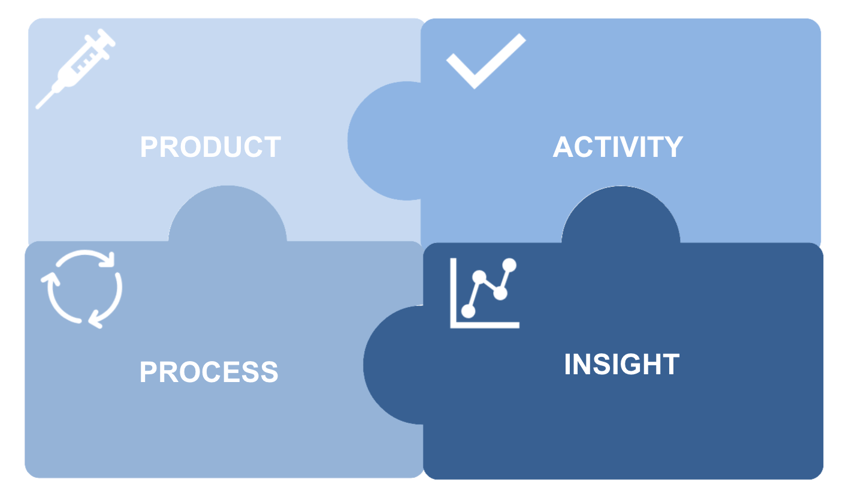
Modern AI technologies enable more effective product inspection while also helping manufacturers understand production activities, proactively identify deviations, and provide operators and quality teams with faster access to information.
This shift represents the foundation of what is increasingly referred to as cognitive manufacturing.
A Practical Use Case: Automated Line Clearance
An example presented during the training was SEA Vision’s Automated Line Clearance solution.
Traditionally, line clearance is a critical GMP activity performed before production starts. It ensures that equipment and production areas are free from materials, documents, or components related to previous batches.
Despite its importance, conventional line clearance processes often present several challenges:
- Manual execution by operators
- Frequent turnover of line operators leads to high training demand
- Paper-based documentation
- Time-consuming procedures
- Limited objective evidence of machine status
- Machine not designed for line clearance procedures
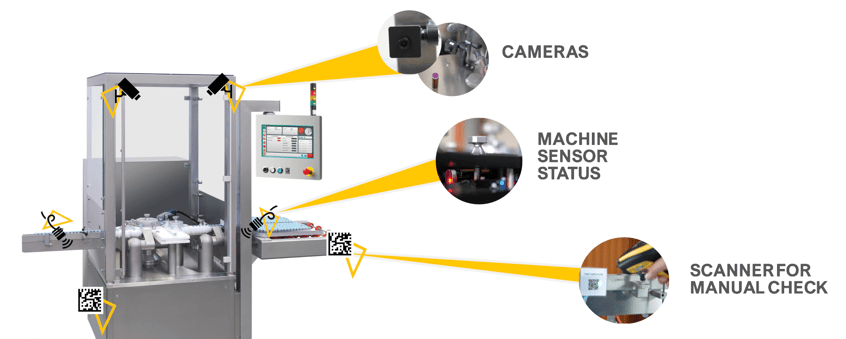
Automated Line Clearance addresses these challenges through a combination of cameras, sensors, machine-status verification, and AI-driven image analysis to automate verification activities while generating digital evidence throughout the process.
The result is a more standardized, paperless, and traceable process that can reduce line downtime while strengthening compliance documentation.
Trust Through Evidence
Automation must never come at the expense of traceability.
For this reason, the Automated Line Clearance workflow generates comprehensive digital reports that include:
- Process summaries
- Time and date records
- Audit trails
- Clearance results
- Visual evidence captured during automated checks
- Records of all attempts and user interventions
Can AI Make GMP Decisions?
The answer presented during the training was clear:
No.
AI can support GMP processes, but quality decisions remain under human responsibility.
In SEA Vision's approach, AI automation is developed with human oversight by design. While AI correlates data and evidence, its initial analysis and findings are always subject to human review.
Human reviewers remain responsible for:
- Evaluating results
- Managing exceptions
- Taking final quality decisions
This concept is often described as human oversight by design, where human review is intentionally embedded into the workflow rather than added as an afterthought.
Even when automated analyses suggest a positive outcome, confirmation actions remain restricted to authorized users, and any overrides are fully recorded within audit trails.
Automated AI-driven Line Clearance: Human-in-the-loop depends on AI maturity
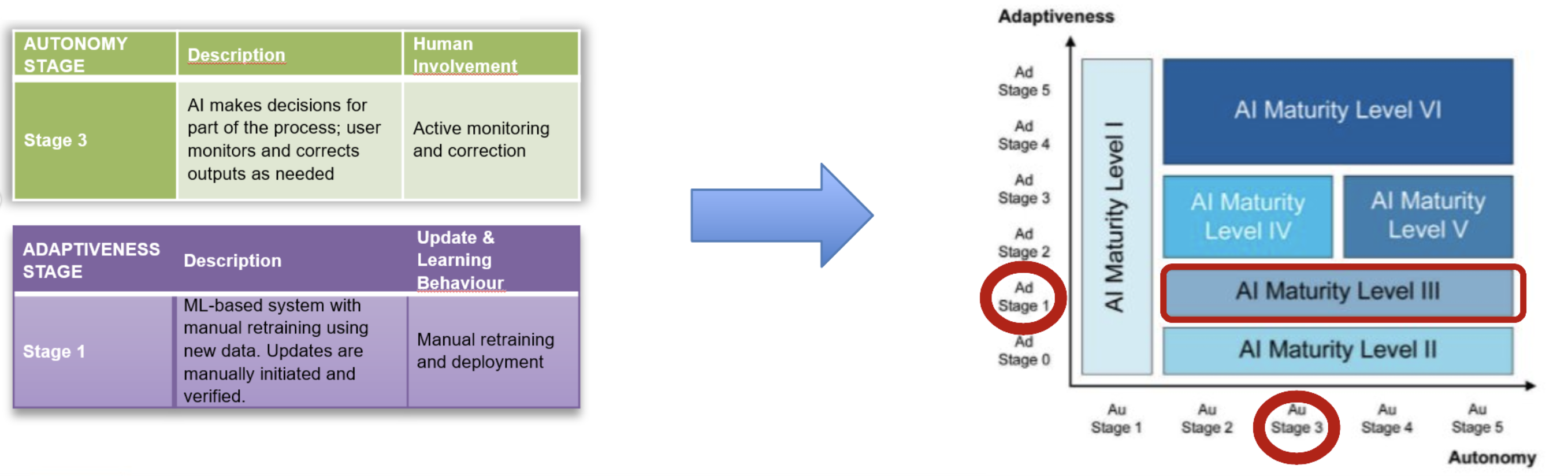
According to ISPE GAMP® Guide: Artificial Intelligence (published in July 2025), the AI system maturity is the extent to which an AI system can take control and evolve based on its own mechanisms, subject to the constraints imposed on the system in the form of user or regulatory requirements.
The guide assesses AI maturity through two key dimensions: Autonomy and Adaptiveness. Autonomy is defined as the degree to which an AI subsystem relies on embedded controls rather than human verification for functions that may impact patient safety, product quality, and data integrity. Adaptiveness refers to the AI subsystem's ability to automatically perform updates and thereby improve its performance without human intervention.
To assess the maturity of the AI model implemented for Line Clearance (LC), the framework described in the guide was applied. The evaluation determined that the system corresponds to Autonomy Stage 3 and Adaptiveness Stage 1, resulting in an overall classification of AI Maturity Level AU3. This classification indicates that the AI system can autonomously execute predefined tasks and support operational decision-making, but the user is always in charge to monitor and correct or accept the model output (concept of human-in-the-loop/human oversight by design). At the same time, the model does not automatically update or self-improve during routine operation, with any modifications requiring formal review, approval, and revalidation activities.
Automated AI-driven Line Clearance: from AI maturity to validation strategy
As AI becomes more common in pharmaceutical operations, validation strategies must evolve accordingly.
Validation now extends beyond functional verification to encompass ongoing trust, oversight, and fitness for intended use.
These AI characteristics have the following relative Validation focus:
1. Intended use
What GMP decision is supported? The first step is understanding which GMP activity the system supports and whether it directly influences quality decisions.
2. Level of autonomy
How much human oversight is required? Higher AI autonomy requires stronger controls and oversight. At the same time, it reduces operator involvement, standardizes execution, and minimizes downtime.
3. Risk to product Quality
What evidence is needed? Validation efforts should always be proportional to risk. Applications with higher GMP impact require stronger evidence of performance and reliability.
4. Model evolution
How is performance maintained over time? AI systems may evolve through retraining and updates. Validation therefore extends beyond initial deployment and must consider the entire lifecycle of the solution.
The validation strategy for Automated AI-driven Line Clearance is built around four critical dimensions. Detection reliability verifies the accuracy of AI-based checks during the clearance process, while system resilience ensures the solution can safely handle interruptions and recovery scenarios.
Human oversight remains embedded, reinforcing that final responsibility stays with qualified personnel. At the same time, data integrity is maintained through audit trails and automated evidence generation, providing the traceability required to support GMP compliance and regulatory inspections.
From AI to Manufacturing Intelligence
The discussion at the AIFA training session highlighted an important reality: the future of pharmaceutical manufacturing will not be defined by AI alone, but by how effectively AI and human expertise work together.
As the industry moves from traditional vision systems toward cognitive manufacturing, successful implementations will be those capable of balancing innovation with regulatory expectations, leveraging AI to enhance decision-making while preserving the human accountability that remains fundamental to GMP environments.
SEA Vision thanks PDA Italy Chapter and AIFA for the opportunity to contribute to this important discussion on the role of Artificial Intelligence in pharmaceutical manufacturing and quality assurance.
Request information